

These industrial compostable bags are 100% compostable in 180 days under Industrial compost environment. Industrial Compost means bags can be decomposed under specific compostable conditions in Waste composting plant.
100% Compostable Packing Bags Formula
We welcome everyone to create a clean world!!!
“Bio-compostable Material – The most effective sustainable solution to alternate to single use disposable plastic”
POLY LACTIC ACID (PLA CORN STARCH) BIO DEGRADABLE PACKING BAGS
What are Bio-plastics?
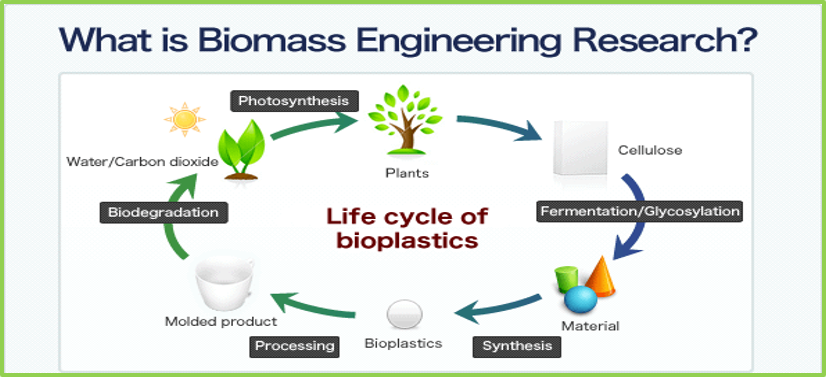
Bio-plastics are a new generation of compostable & biodegradable plastics which are made from readily renewable resources such as corn, soybeans, potato, etc.
What is PLA?
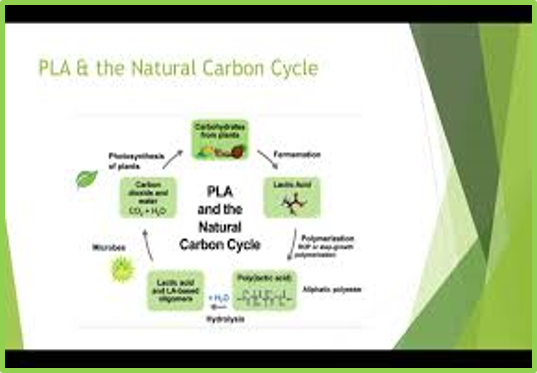
PLA is Poly Lactic Acid and is a product made from corn-starch, with a look and feel like petroleum based plastic. PLA is the most commonly used bio-plastics for making products.
How are the bio-plastics products manufactured?
They are made by processes which are similar to how plastic products are made – they are thermal formed.
How long will the PLA take to decompose or compost?
Certified compostable PLA by ASTM are required to degrade within 180 days in a commercial composting facility. Home composting systems may take more than 180 days to biodegrade. Based on the thickness, kind of resins, the PLA can have varying rates of decomposition. The corn cutlery, cold cups, drinking straws and the bio bags can take up to 180 days in a commercial composting facility. The potato cutlery will also take 180 days or more to degrade in a commercial facility. Biodegradation will be faster if the products are broken down to small pieces or ground up.
What if I throw PLA into the trash?
PLA cutlery is designed to return to the soil through composting. If thrown into the trash it will be collected and end up in a landfill. Landfills are sealed which means little biodegradation occurs below the surface, so what is thrown away may not degrade for a long time. However, it is still environmentally better than plastic, as eventually the bio-plastics will still biodegrade, while petroleum based plastic will stay around for hundreds of years.
What if I throw my PLA into the recycling bin?
If PLA products are thrown into the recycling bin, they will not be recycled into other plastic products. PLA is currently not manufactured to be recycled, but to be composted. (Keep in mind that after the sorting process, a low percentage of plastic is actually recycled.)
How does PLA handle heat and cold?
The PLA products are heat resistant to 104 degrees. PLA can be used only for cold and warm foods and are freezer safe.
What’s the difference between biodegradable and compostable products?
Biodegradable plastic is a degradable plastic in which the degradation must result from the action of naturally occurring microorganisms, such as fungi or bacteria. Compostable plastic is a plastic that undergoes biological degradation during composting to yield carbon dioxide, water, inorganic compounds and biomass at a rate consistent with other known compostable materials, such as cellulose, leaving no visually distinguishable or toxic residues. Biodegradability does not necessarily mean compostability but is one of the components of compostability. In addition, compostability requires disintegration of 90% of the material to a size less than 2mm, and also mandates that the compostable material does not create any eco-toxicity in the soil.
Is composting a feasible alternative to landfills? By composting biodegradable plastic along with the other biodegradable waste, we can generate much needed carbon-rich soil (humus) instead of filling up our valuable land with waste. Compost amended soil can have beneficial effects by increasing water & nutrient retention in soil, reducing chemical inputs, (toxins, pesticides, etc.) and suppressing plant diseases. Many communities have large-scale centralized collection of yard waste and compostable material. Through composting the problem of waste disposal could become the solution for low-input sustainable agriculture.
BIO POLYMER COMPOSTABLE POLYBAGS
“OK Compost” Products:
- “OK Compost” bags are manufactured from bio plastics derived from plant sources and renewable resource like corn starch, sweet potatoes , sugarcane and soya oil
- Bio plastics are eco-friendly compared to traditional plastics
- Significantly reduce greenhouse gas emissions, Emission of less carbon dioxide hence, no cause of global warming.
- Biodegradability or Bio composability is that, a material returns to its natural state when buried in the earth.
- The use of bio plastics offers significant advantages in both ecological economical aspects.

Raw Materials used to Manufacture Bio- Compostable Polymers
- Poly lactic acid (PLA)
- Poly Butylene adipate-co-terephthalate (PBAT)
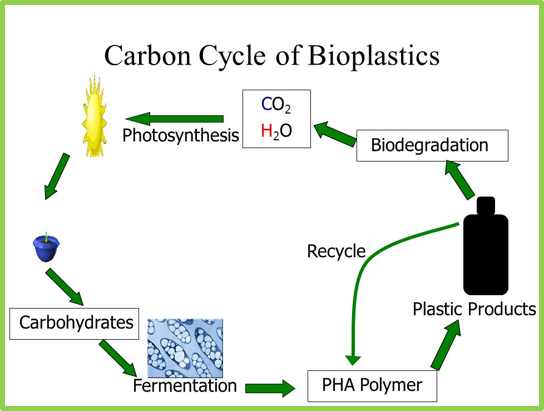
- Polyhydroxyalkanoates (PHAs)
- Poly-3-hydroxybutyrate (PHB)
- Polyhydroxyvalerate (PHV)
- 6. Cellulose esters/Acetates
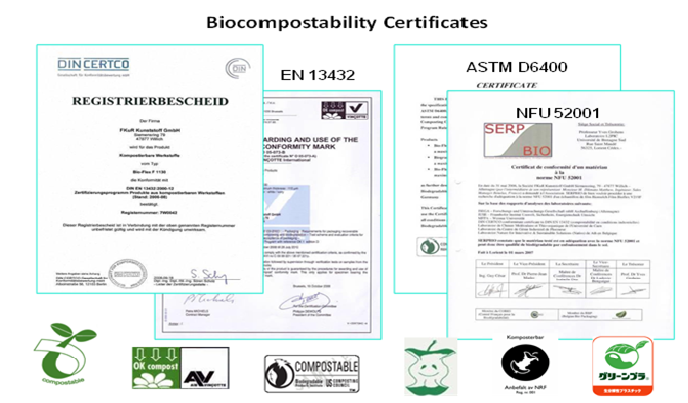
The Bio polymers made up of Poly lactic acid (PLA), Poly Butylene adipate-co-terephthalate (PBAT) from corn, soya and wheat bearsthe OK COMPOST label and complies with the European Norm EN 13432, U.S Norm ASTM D 6400 and International Norm ISO 17088.
Our OK Compostable raw material are certified by VINCOTTE / TUV AUSTRIA as per EN13432 / ASTM D 6400
Shelf life of poly bags: 15-18 months when stored in dry atmosphere @ room temperature
Decomposing period : 6 months for industrial composting plant
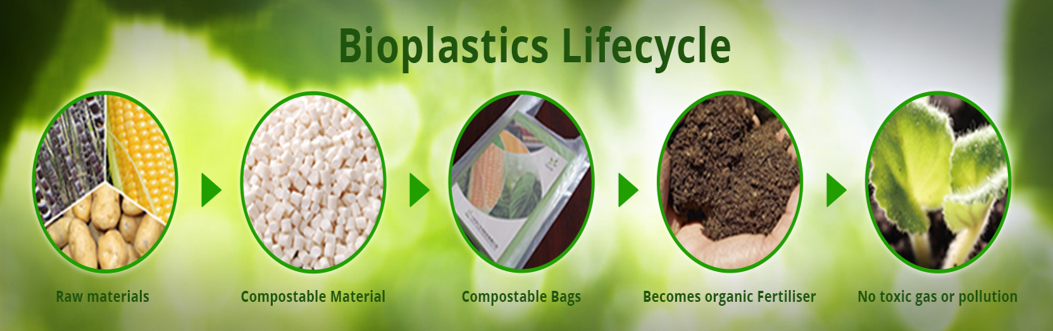
Composting is a two-step process including fragmentation and biodegradation. Composting is the biological process of breaking up organic matter such as food, manure, leaves, grass trimmings, paper, coffee grounds, and bio-plastics, etc., resulting in biomass (nutrient rich soil amendments). Fragmentation is the first step in this process when we notice material turning into smaller pieces. The second step is biodegradation when oxygen breathing microbes (micro-organisms) consume the organic matter as food and convert it into biomass, water, and carbon-dioxide (CO2).
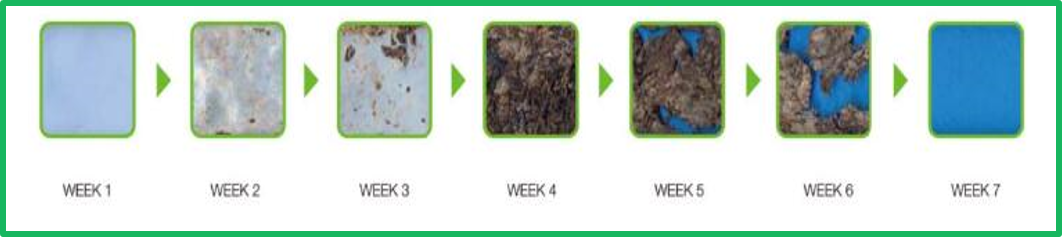
Visual presentation of degradation of compostable film in the slide frame during industrial composting.


Poly Bags with Button, Zipper Lock, header card, hanger etc..,
These poly bags are used for premium packing of garments with Brand name, size header card, buttons, air holes and warning matter printing.
PVC Pouch with button, zipper lock, header card, hanger etc..,
These poly bags are used for premium packing of garments with Brand name, size header card, buttons, air holes and warning matter printing.